


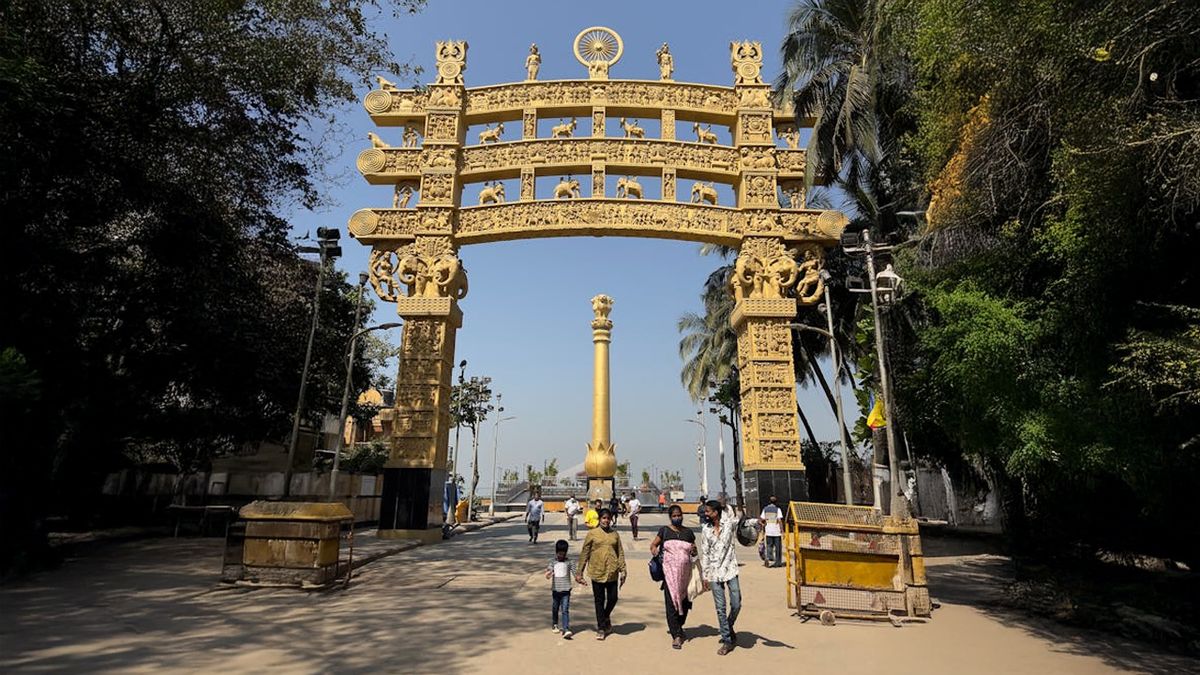
Chaitya Bhoomi stands by the Arabian Sea in Dadar, Mumbai. At first glance, it is a quiet memorial. But beneath its white dome and open skies, it carries the weight of a revolution. This is where Dr. Bhimrao Ramji Ambedkar was cremated on December 6, 1956. What began as a stretch of shoreline became sacred ground. The tide that once touched his funeral pyre now carries stories across generations.
The name itself holds meaning. Chaitya refers to a Buddhist shrine. Bhoomi means land. Together, they form a landscape of faith and freedom. Just weeks before his death, Ambedkar embraced Buddhism in Nagpur along with hundreds of thousands of followers, turning conversion into a collective awakening. It was not just a change of religion. It was a reclamation of dignity. Chaitya Bhoomi, then, is not merely a resting place. It is a lighthouse built from memory, guiding those who seek equality toward a different horizon.
Its history is etched in footsteps. Every year on Mahaparinirvan Diwas, December 6, lakhs of people travel from across India to gather here. They arrive in buses, trains, and on foot. The crowd swells like a human ocean, waves of blue flags moving in rhythm with hope. They come to pay tribute to Babasaheb, but they also come to renew a promise. The air fills with slogans, prayers, and quiet reflection. It feels less like a ceremony and more like a heartbeat, steady and collective, reminding the nation of its unfinished work.
Architecturally, the memorial draws from Buddhist design, with a stupa-like structure symbolizing peace and enlightenment. Inside stands a statue of Ambedkar, upright and resolute. He does not appear as a figure frozen in time. He feels like a sentinel, watching over the Constitution he helped craft, guarding the ideals of justice, liberty, equality, and fraternity. The space around him is often lined with books, his words traveling from hand to hand like small sparks. Each page turned is another flame kept alive.
Over decades, Chaitya Bhoomi has grown beyond remembrance. It has become a site of assertion. Conversations about caste discrimination, education, rights, and representation echo through its grounds. The memorial functions like a public square shaped by history, where grief transforms into resolve. Here, mourning does not weaken. It strengthens. The site absorbs pain and returns it as a purpose.
Today, Chaitya Bhoomi stands as both a shrine and symbol. For millions, it represents self respect reclaimed and identity affirmed. It is a compass for those navigating a society still marked by inequality. As the sea continues its endless rhythm beside it, Chaitya Bhoomi remains steady, a monument not only to a man, but to an idea. An idea that refuses to be buried.