


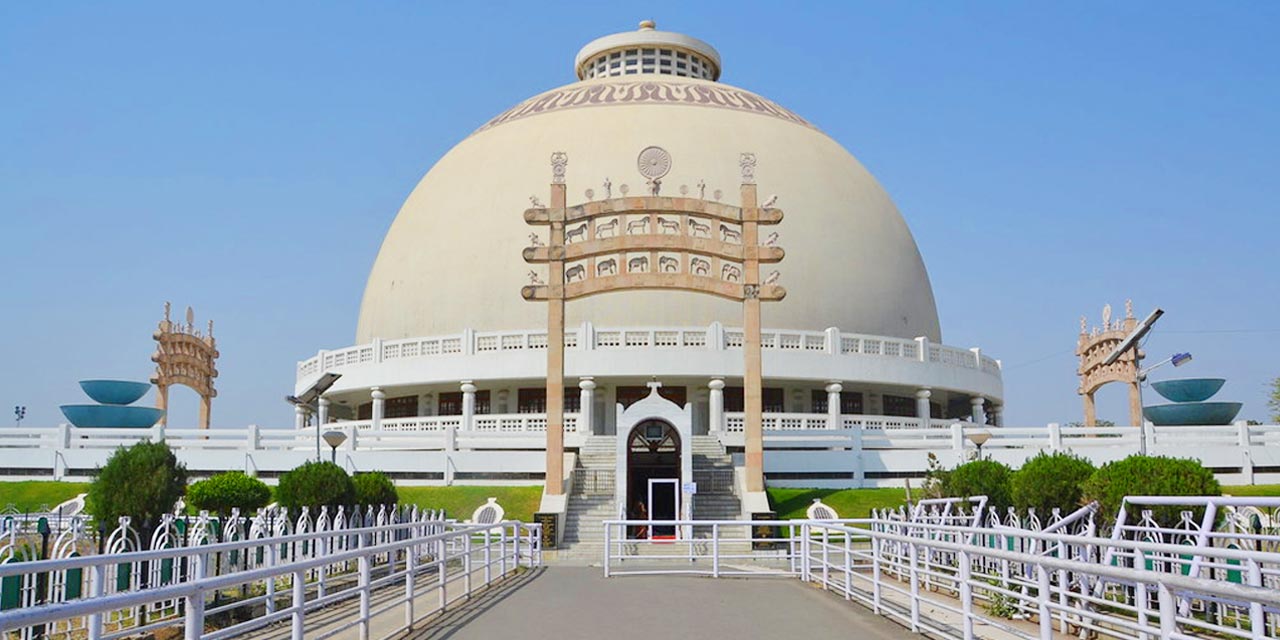
Deekshabhoomi stands in Nagpur, in the heart of a city that has witnessed one of the most radical acts of collective self assertion in modern India. At first glance, it is a vast stupa rising against the sky, serene and symmetrical. But beneath its dome lives the memory of a turning. This is where, on October 14, 1956, Dr. Bhimrao Ramji Ambedkar embraced Buddhism along with lakhs of his followers. What might have appeared as a religious ceremony was, in truth, a social earthquake. The ground did not just hold bodies that day. It held a decision to walk away from caste.
The name itself carries intention. Diksha means initiation. Bhoomi means land. Together, they mark a landscape of becoming. This was not a private spiritual act. It was a public declaration that dignity could not coexist with graded inequality. When Babasaheb took the 22 vows, he did more than change faith. He refused a system that sanctified humiliation. He chose an ethical path aligned with liberty, equality, and fraternity. Deekshabhoomi, then, is not simply a site of conversion. It is a threshold between imposed identity and chosen selfhood.
Its history moves through generations. Every year on Dhammachakra Pravartan Din, millions gather here. Trains arrive heavy with anticipation. Buses line the roads. Families travel across states carrying portraits, blue flags, and books. The crowd gathers like a tide of memory, steady and expansive. They come to remember that October afternoon. They come to renew the vows. The air hums with chants of “Jai Bhim,” with recitations, with quiet reading circles under open skies. It feels less like a commemoration and more like a collective affirmation that the work of annihilating caste continues.
Architecturally, the great stupa draws from Buddhist design, circular and expansive, symbolising equality and awakening. It does not tower to intimidate. It rises to shelter. Inside, the space holds silence differently. It is not empty. It is full of history. Babasaheb’s presence is felt not as nostalgia but as direction. He stands not as a figure of the past but as a guide toward a future that remains unfinished. Around the grounds, books circulate hand to hand. Conversations unfold on education, land, labour, gender, and rights. Each discussion is an echo of the vows first spoken here.
Over time, Deekshabhoomi has grown beyond memory. It has become pedagogy. It has become political imagination. It reminds us that caste operates not only in institutions but in everyday life, in rituals, in language, in the stories we inherit about ourselves. Conversion at Deekshabhoomi disrupted that inheritance. It replaced shame with self respect. It replaced silence with articulation. It transformed faith into a framework for justice.
For many, the journey to Deekshabhoomi is also a journey toward healing. Caste leaves scars on the mind as much as on material conditions. To stand on this land is to encounter a different narrative of selfhood, one not defined by imposed inferiority but by chosen ethics and collective courage. The vows taken here continue to ask questions of the present. How do we refuse caste in our institutions. How do we practice equality in our homes, our classrooms, our workplaces. How do we make fraternity more than a constitutional word.
Today, Deekshabhoomi stands as both sanctuary and summons. It is a monument not only to a historic conversion but to a living commitment. As the city moves around it and generations shift, the stupa remains steady. It reminds us that liberation is not inherited. It is practiced. It is studied. It is organised.
And like the vows spoken here, it refuses to fade.